
The $330,000 Margin Leak: How 100-Truck Fleets Are Bleeding Fuel (And How to Fix It)
With Australian diesel prices currently hovering around the $2.25 a litre mark, fuel is no longer just an operational line item, it is the single biggest threat to your transport margins.
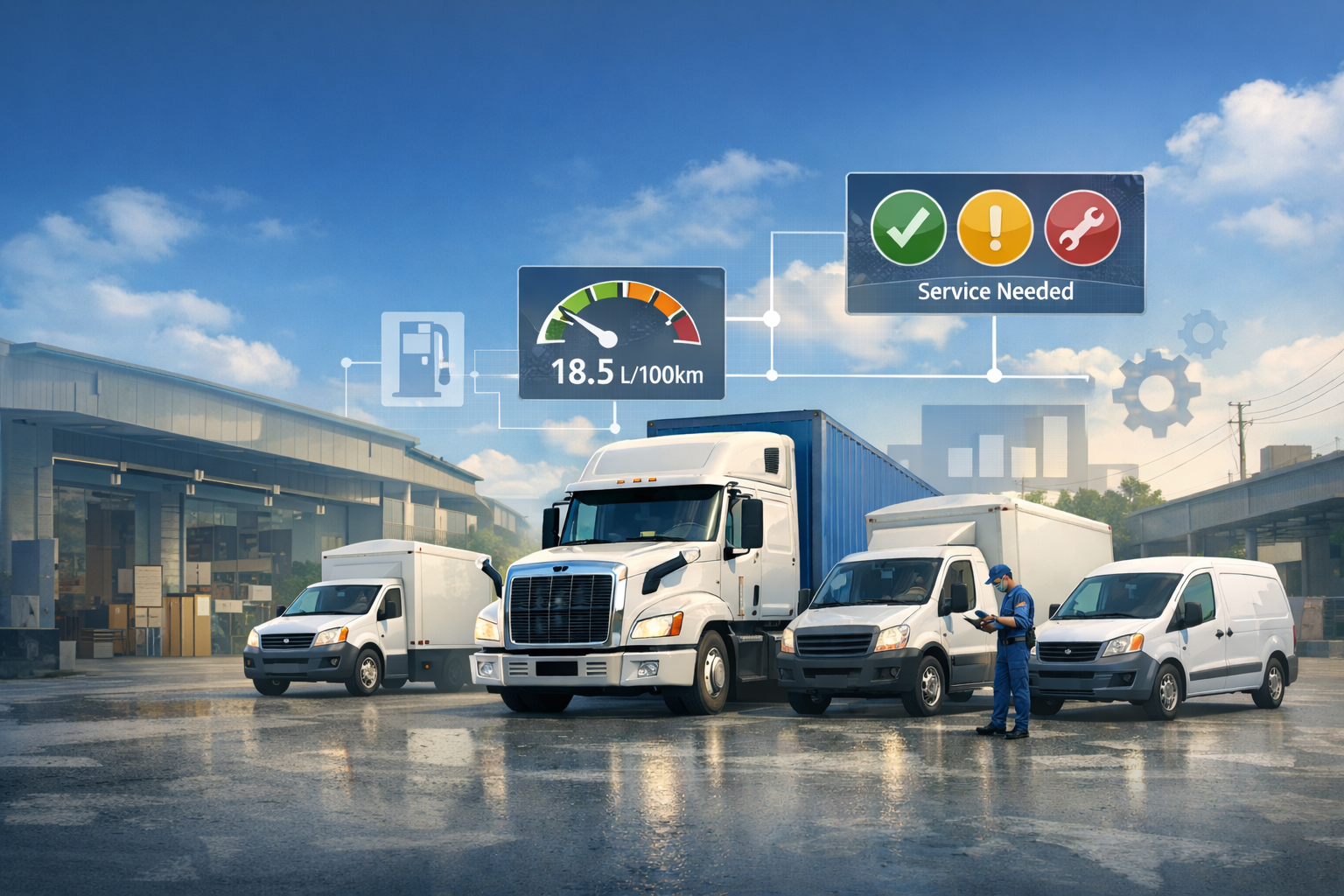
If you are running a mid-market transport operation, you already know fuel costs are high. What you might not know is exactly where that fuel is being wasted, and whether your fuel levies are actually covering the inefficiencies of specific trucks or routes.
Let’s look at the math for a standard 100-vehicle heavy fleet. If each truck travels 100,000 km a year at an average of 50L/100km, your annual fuel spend is around $11,250,000.
If disconnected data and manual reporting are hiding just a 3% efficiency gap, that is over $330,000 in pure margin evaporating every single year. To put that into perspective, $330,000 is equivalent to writing off a brand-new prime mover every single year as pure waste.
The frustrating part? You already have the data to plug this leak. It is sitting in your fuel card portals, your telematics systems, and your transport management software (TMS). But because these systems don't talk to each other, you lack a single source of truth.
The 4 Major Efficiency Blind Spots
For operations and finance teams relying on Excel spreadsheets, finding that $330,000 leak requires an exhausting amount of manual maneuvering. Here is the nightmare your team actually has to go through to track down the biggest blind spots in fuel waste:
1. True Fuel Cost Per Tonne-Kilometer
Are your trucks making money on a specific job, or burning profits?
- The Manual Grind: Exporting monthly fuel CSVs, pulling TMS job logs, and downloading telematics. Manually matching regos, aligning timestamps, and calculating tonne-kilometers.
- The Result: Hours of spreadsheet work. By the time the report is done, the data is weeks old and the money is lost.
2. Fuel Card Fraud & "Leakage"
Is every drop going into your assets, or into personal vehicles?
- The Manual Grind: Cross-referencing pumped volume against OEM tank capacity, then pulling GPS data for that exact timestamp to verify the truck was physically at the station.
- The Result: Nearly impossible to do at scale. Fraud is only caught when it becomes incredibly obvious.
3. Tracking Excessive Idling
Trucks idling at depots burn 2 to 4 litres of diesel an hour.
- The Manual Grind: Extracting raw engine data, filtering for 0 km/h with the engine on, and matching timestamps against driver schedules to separate mandated rest from preventable waste.
- The Result: A massive data-processing headache that usually gets ignored because files are too large for Excel.
4. Fleet Exception Spotting
If identical prime movers burn different amounts of fuel, why?
- The Manual Grind: Pulling historical data across platforms, normalizing route variations, and calculating averages to spot outliers.
- The Result: Anomalies are rarely caught until months later, resulting in missed opportunities for preventative maintenance.
What Does It Really Cost to Fix Your Data?
Do you buy tools and build the capability yourself, or do you use a managed intelligence layer that includes ingestion, warehousing, business rules, and reporting? Here is the practical buying question for Australian mid-market companies:
| Option | People & Software Required | Indicative TCO | Time to Value | What It Really Delivers |
|---|---|---|---|---|
| Do Nothing / Excel Common starting point | 0.5 - 1 FTE manually exporting and stitching data. Existing CRM/TMS/ERP + Excel. | $80k - $150k Hidden labour cost | Immediate but reactive | Manual visibility only. No single source of truth, inconsistent metrics. |
| Microsoft-First Power BI + SQL | 1.5 FTE (Internal owner + partial engineering). Power BI, SQL/Azure storage. | $120k - $280k Labour + software | 2-6+ months | Functional reporting layer. Still dependent on internal ownership of joins and logic. |
| Full Data Warehouse Snowflake + BI | 2 - 3 specialized roles: Data engineer, analytics engineer, analyst. Warehouse, ingestion tooling. | $220k - $500k+ Labour-heavy spend | 3-12 months | Technically robust foundation. Requires ongoing massive investment to maintain. |
|
Conifr
Managed Intelligence Platform + Delivery |
Minimal internal lift. Handled by Conifr Analytics Team. Ingestion, warehouse, logic, dashboards, and AI bundled. | Fraction of the Cost Typical Yr-1 cost vs builds | 2 - 5 Weeks | A working, trusted model of the business. Includes ability to speak to your data with Charlie, our AI assistant. |
Stop Bleeding Margin to Data Chaos
The issue is not whether modern tools can model your fleet's data. The issue is whether your business has the time, the people, and the confidence to make those tools produce trusted insight. Without a well-organized single source of truth, your business loses time and money to data chaos.
You don't need to hire a team of SQL developers or rely on reactive, month-old Excel spreadsheets. Conifr is designed to automatically ingest the fragmented data from your fuel cards, TMS, and telematics, doing all the complex joining behind the scenes.
We provide a managed intelligence layer—giving your operations and finance managers instant, automated dashboards that highlight precisely which assets are underperforming, where exceptions are occurring, and how to fix them today.